
Modern Intimacy XO · Self Love and Healing
The Quiet Fear Behind Being Alone
There’s a difference between wanting connection and needing it.
Most people don’t fear loneliness. They fear what loneliness reflects back to them.
Being alone is not the absence of love, it’s the presence of self.
But when you don’t know how to sit with yourself, the silence becomes loud.
Your thoughts feel heavier.
Your emotions feel sharper.
And suddenly, being alone feels less like peace and more like exposure.
Not knowing how to be alone is not a flaw.
It is a sign that something inside you has been abandoned for a long time.
Here are the signs, the roots, and the truth beneath it.
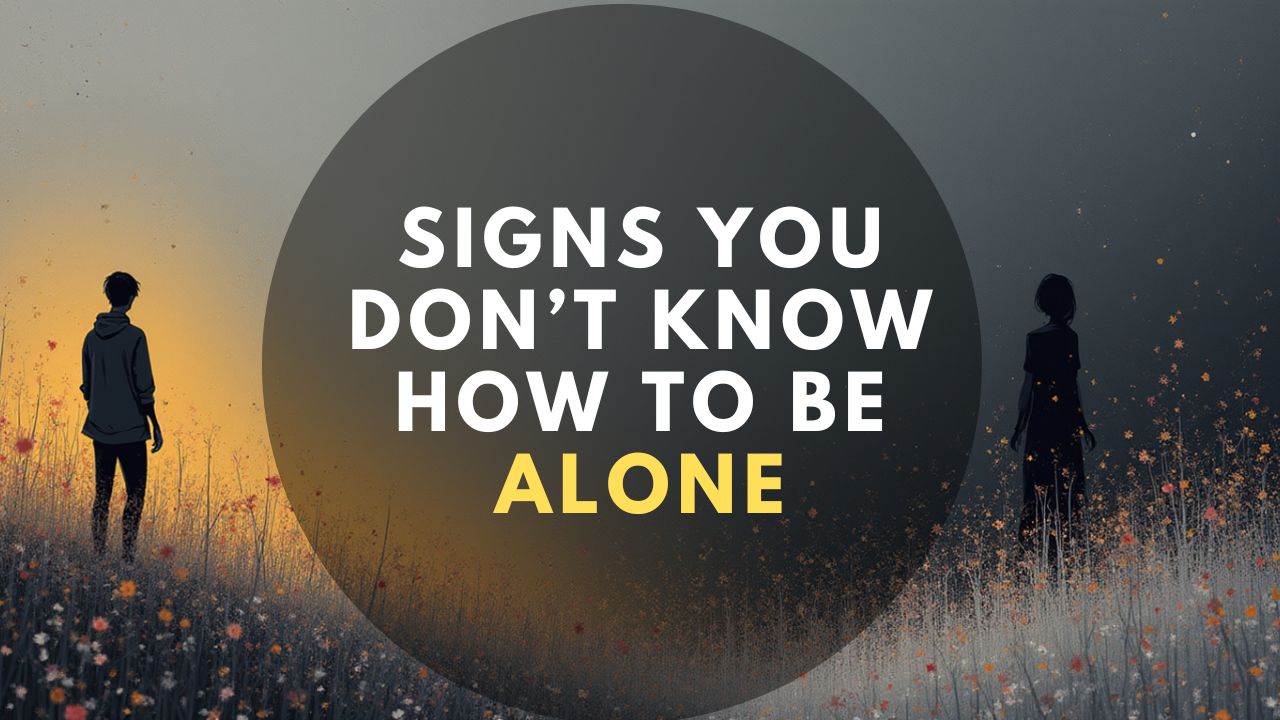
Signs You Don’t Know How To Be Alone
You move from relationship to relationship without space to breathe.
As soon as one connection ends, you find yourself in another.
It doesn’t always feel intentional.
It feels like survival.
The silence between partners feels unbearable, so you fill it before it can confront you.
You confuse attention with affection.
Text messages, validation, being chosen, being wanted.
You chase the feeling of being seen, even if the person or the connection is misaligned.
You crave the hit of reassurance more than the reality of the relationship.
You feel anxious when you’re not talking to someone.
You need constant communication to feel secure.
Silence feels like rejection.
Space feels like danger.
Your nervous system stays on alert when you’re not emotionally “attached” to someone.
You lose your sense of identity in relationships.
Your hobbies, routines, and interests shift depending on who you’re with.
You mold yourself to fit their world, even if it means abandoning your own.
Without someone beside you, you feel disconnected from yourself.
You stay in unhealthy relationships out of fear of being alone.
You tolerate incompatibility
You excuse red flags
You hold on long after the connection has expired
Not because it’s love, but because the alternative scares you more.
You idealize potential instead of facing reality.
When you can’t be alone, fantasy becomes a coping mechanism.
You imagine what someone could be, not who they are.
You become attached to possibility instead of truth.
You feel empty when you’re single.
Being alone exposes the parts of you that feel unfinished or unhealed.
Instead of seeing singlehood as space to grow, it becomes a reflection of what you fear you lack.
Why We Don’t Know How To Be Alone
Early attachment wounds
If love in childhood felt unpredictable, inconsistent, or conditional, your adult nervous system may equate solitude with danger.
You learned that love leaves, so you cling tightly to anything that feels like connection.
Societal pressure and cultural messaging
We are taught that partnership equals completeness.
That being single means you’re behind.
That you need someone to be chosen, valuable, or whole.
Escapism from inner work
Relationships become a distraction from your own emotions.
As long as you are attached to someone, you do not have to sit with the truth of yourself.
Silence becomes uncomfortable because it reveals what needs healing.
Fear of identity loss
Some people fear that without a partner, they will not know who they are.
They rely on relationships to anchor their self worth.
Learning How To Be Alone
Learning to be alone is not isolation.
It is integration.
It is the process of coming home to yourself.
Here’s how the shift begins:
Create moments of intentional silence
Sit with your emotions without immediately seeking distraction.
Let the feelings rise.
Let them move through you.
Nothing heals when it is constantly avoided.
Reconnect with your identity
Start doing things because they belong to you.
Hobbies. Routines. Joy.
Choose activities that are yours alone.
Build emotional safety within yourself
Learn to self-soothe.
Practice breathwork.
Journal.
Let your inner world become a place you can trust.
Redefine solitude
Being alone does not mean being unwanted.
It means being with yourself without needing someone else to validate your existence.
Not knowing how to be alone is a sign that there is a part of you waiting to be met.
A younger part.
A wounded part.
A forgotten part.
When you finally learn to sit with yourself, the fear fades.
The emptiness softens.
The craving for external validation quiets.
And you begin to realize that solitude is not punishment.
It is preparation.
You learn to choose connections with clarity instead of fear.
You learn to love without losing yourself.
And you finally understand that being alone is not the problem.
It’s the beginning of becoming whole.
Leave a Reply